Edition 01
Esprit Limoux · Edition 01
A Sleeping Giant Awakens
Carnival. Crémant. Country. Character. Community.
Stories of the artisans and vignerons of Limoux: their people, their place and what they do.
Read the opening editionAdvertisement



In this edition
Wine
A sleeping giant
Before crémant came blanquette. Discover the sparkling wines of Limoux and the people behind them.
Read on this page ↓Carnival
The Carnival of Limoux
Music, masks and ritual at the heart of the town.
Read on this page ↓Country
Limoux and the Haute Vallée
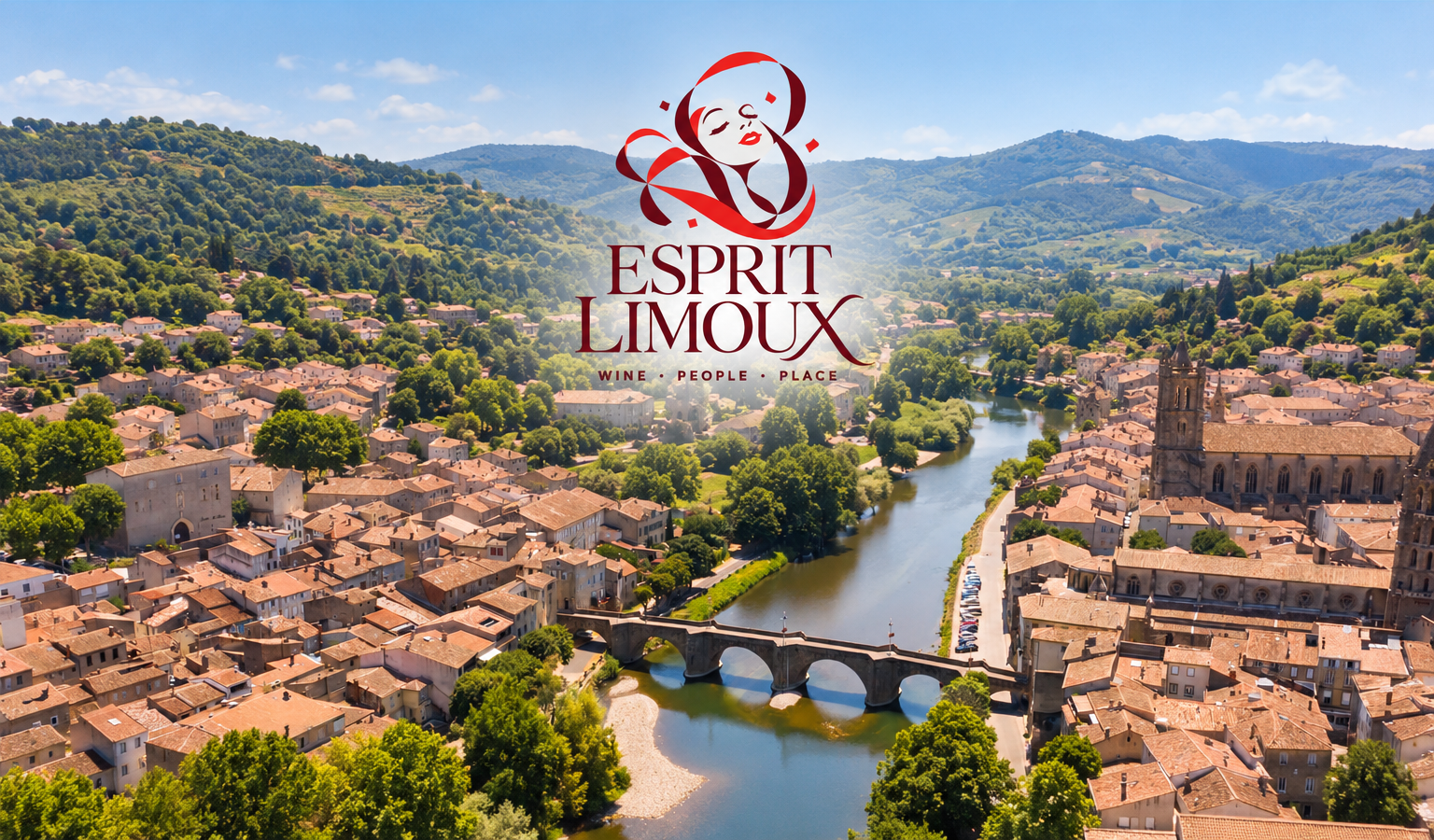
The town, the river and the country around it.
Read on this page ↓Coming soon
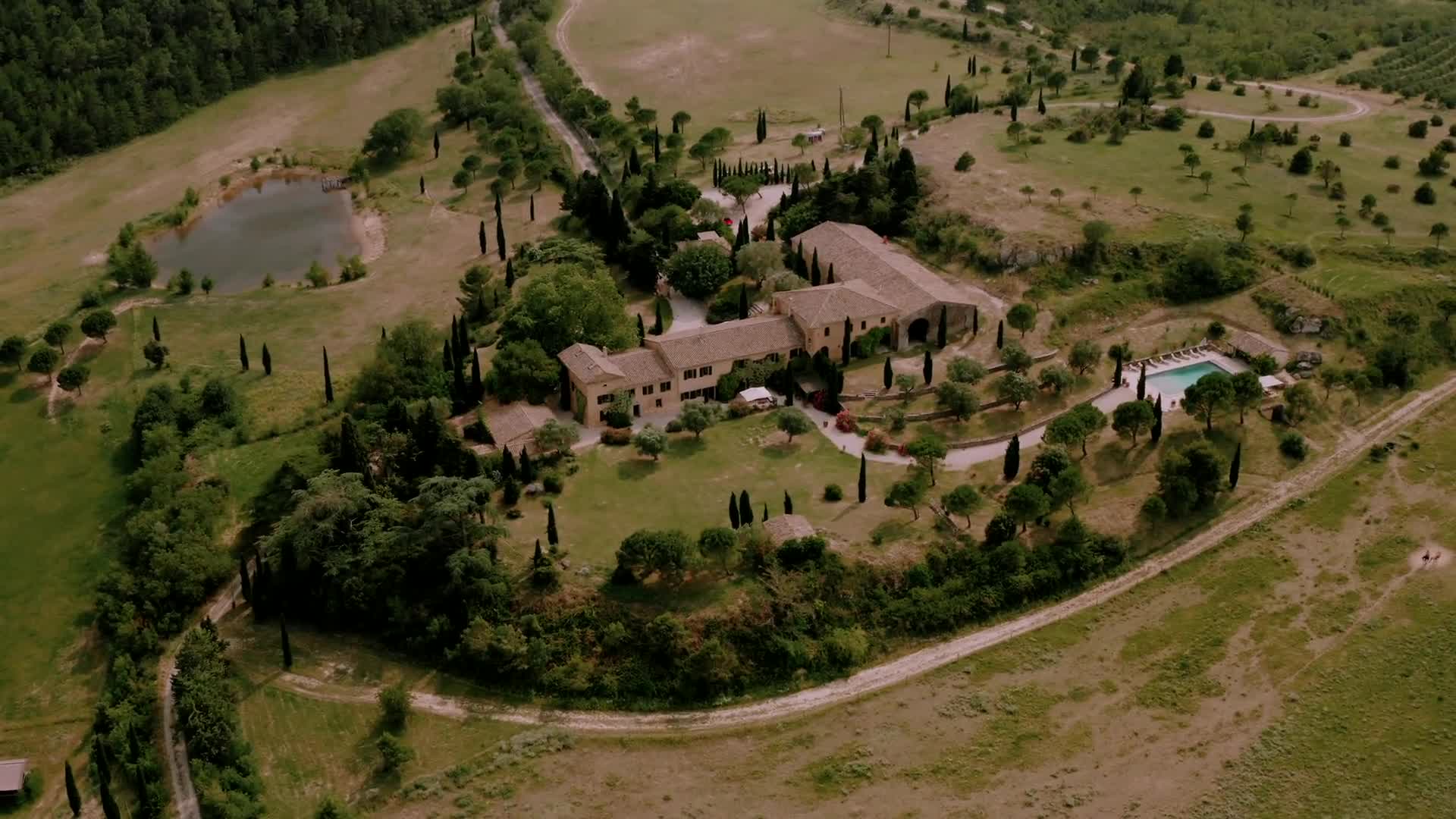
Clos Teisseire — Laetitia
Their story is coming soon.
Coming soon
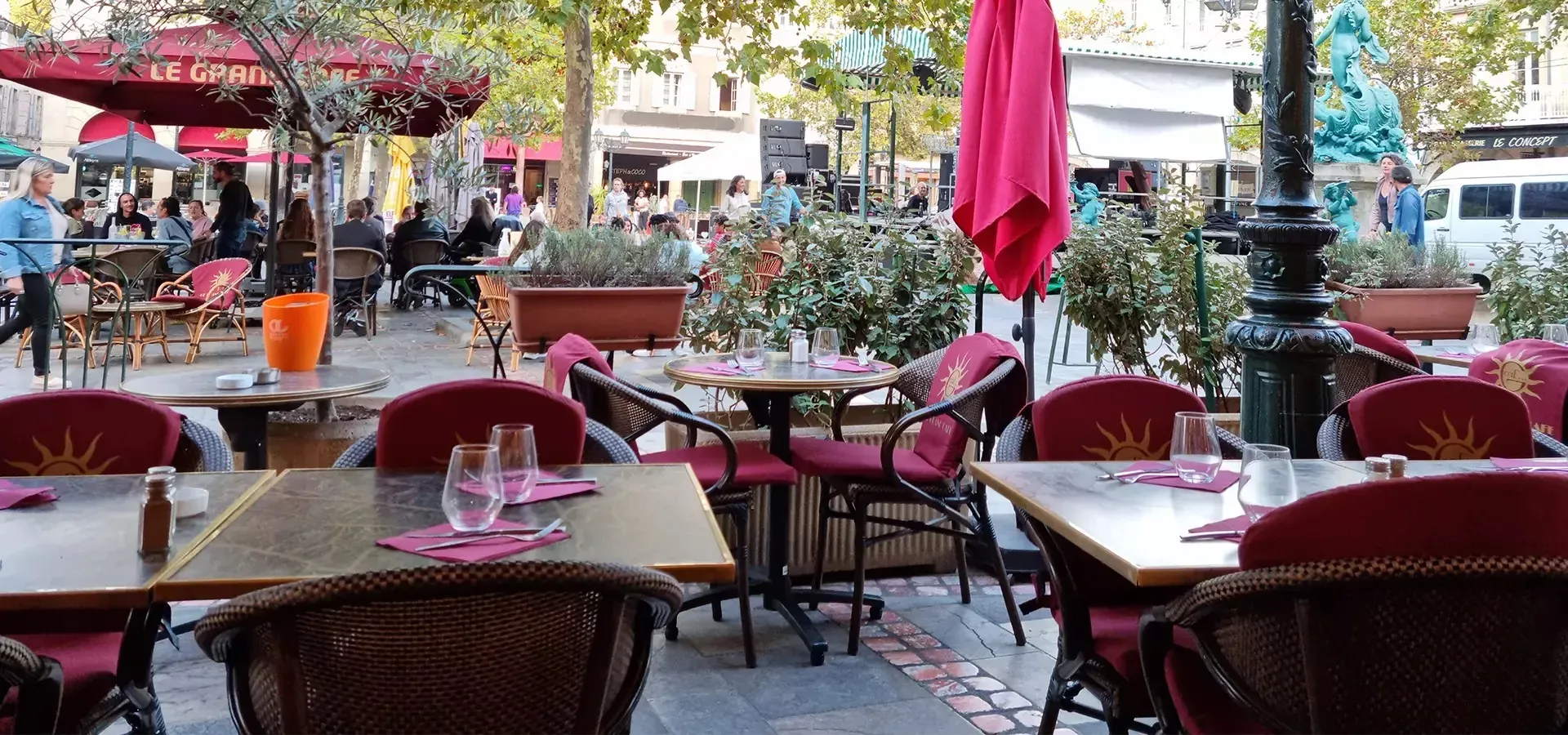
Le Grand Café — Simon
Their story is coming soon.
More stories from Limoux are on their way.
Our story
Something is stirring in Limoux
The first surprise is often in the glass. The next is how little you knew about the place it came from.
Then you arrive in Limoux.
Someone draws up a chair. A bottle appears on the table. The conversation leads to a vineyard you hadn’t heard of, a cellar you ought to visit, a lunch you really must stay for. By the end of the afternoon, you have begun rearranging tomorrow.
I kept finding myself asking the same question: how do more people not know about this?
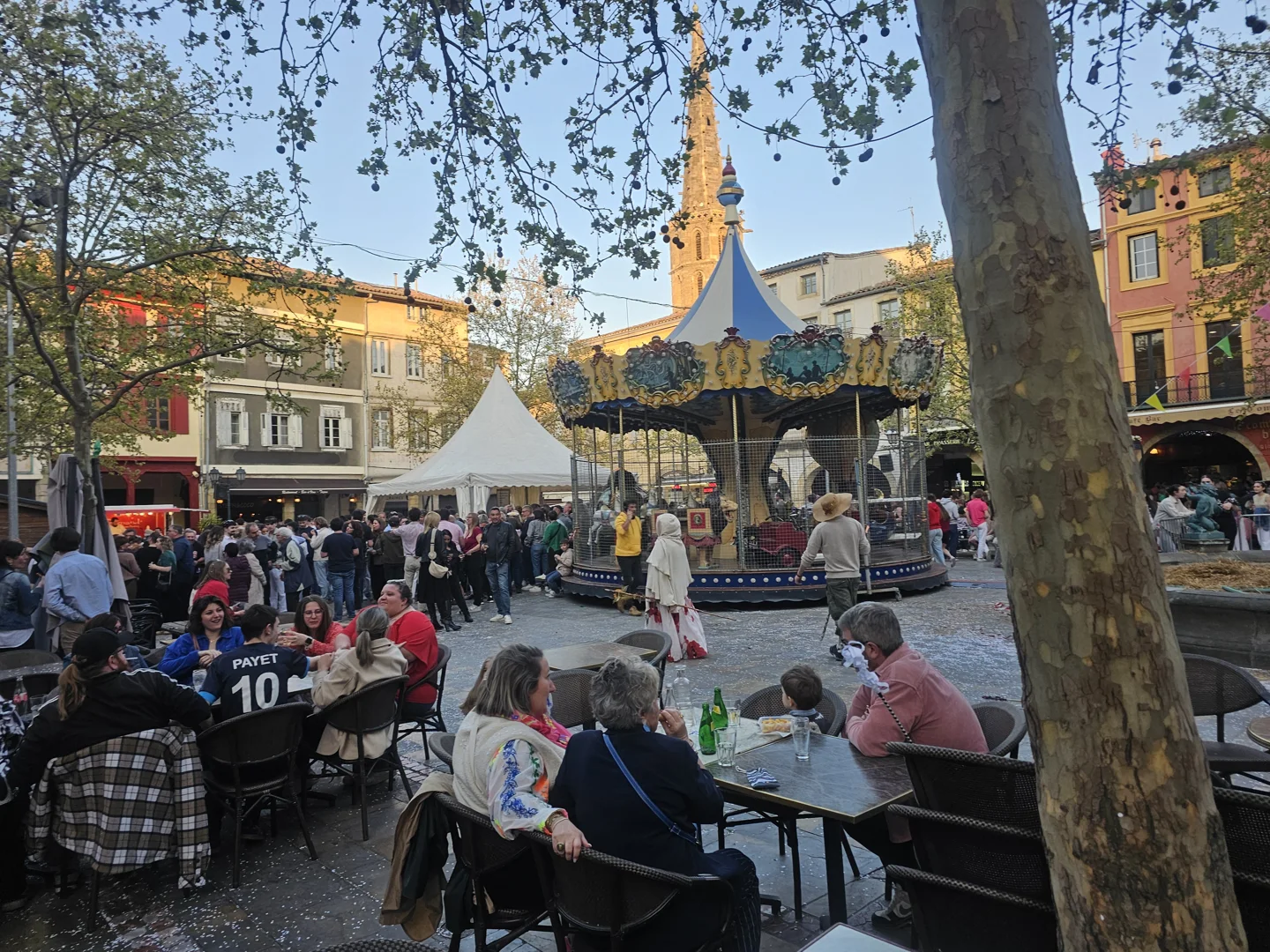
That question became Esprit Limoux.
Here, in the Aude, between the mountains and the Mediterranean, there are people making things worth travelling for. Independent winemakers. Cooks and growers. People carrying on a family’s work, and others who have changed their lives entirely to begin something of their own.
Their stories are where we start.
Wine opens the door. Follow it and you find the markets, the kitchens, the carnival, the landscape—and the conversations that rarely make it into a guidebook.
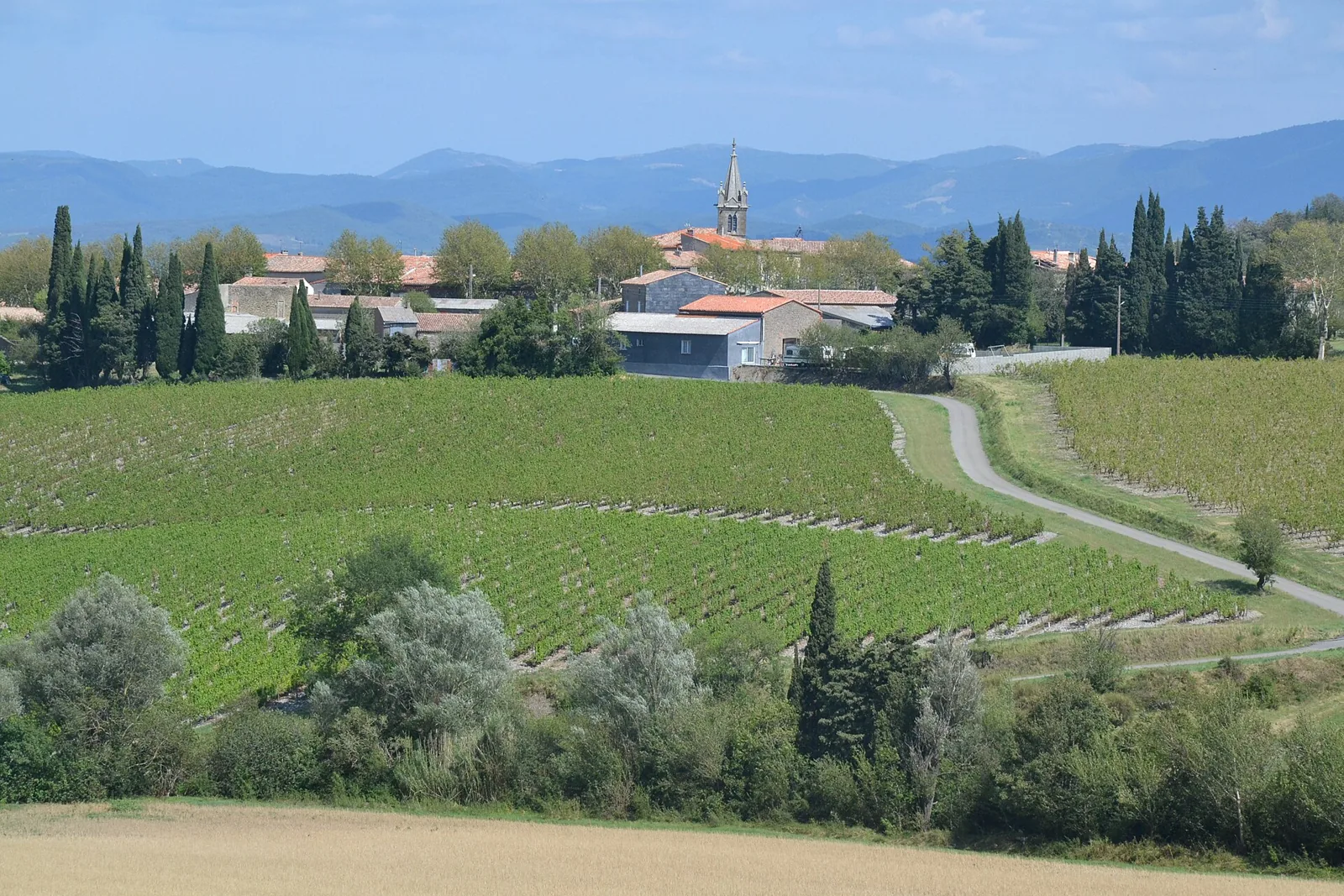
Esprit Limoux has been created to bring this world to a wider audience. In each issue, we will introduce you to the people behind the bottles, take you somewhere worth discovering and give you a reason to look a little closer. Sometimes, a reason to book the journey.
There is a sleeping giant here. You catch a glimpse of it across a lunch table, hear it in a producer’s plans, sense it when someone opens a door and says, “Come and have a look.”
We intend to take them up on the invitation.
Welcome to Esprit Limoux. Stay for a while. We have plenty to show you—and we believe you will want to come back.
Carnival · Culture · Limoux Carnival
The original spirit of Mardi Gras.
Winter belongs to the town.
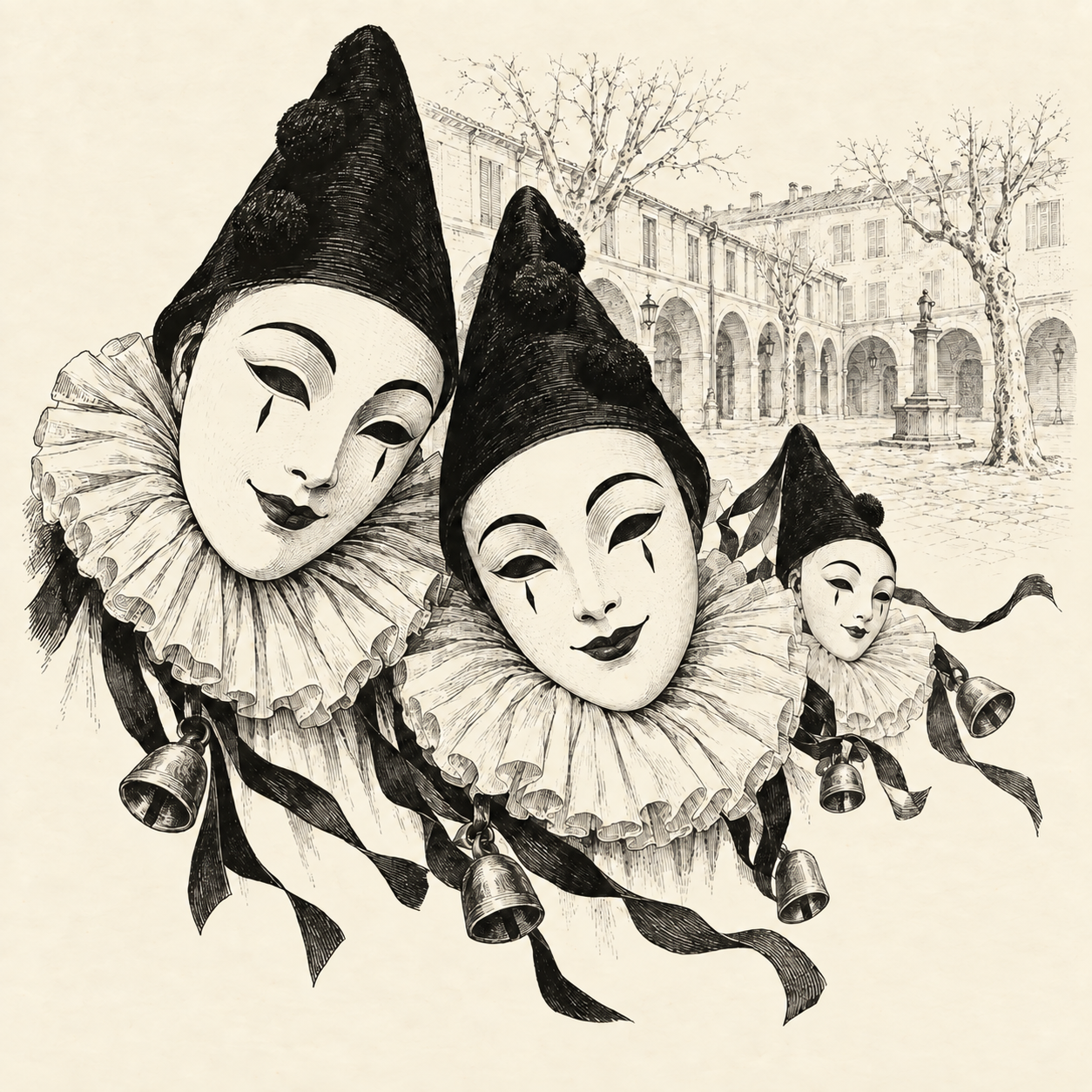
Under the arcades of the Place de la République, the carnival makes a meeting place of Limoux. Come for the masks and the colour. Stay to notice who is speaking to whom.
Behind the mask
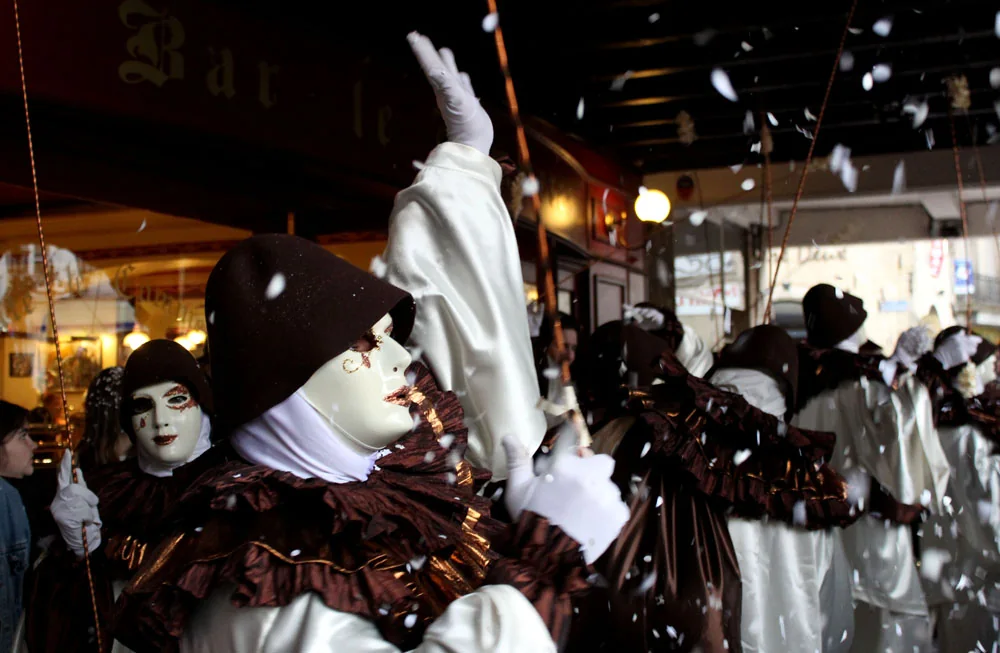
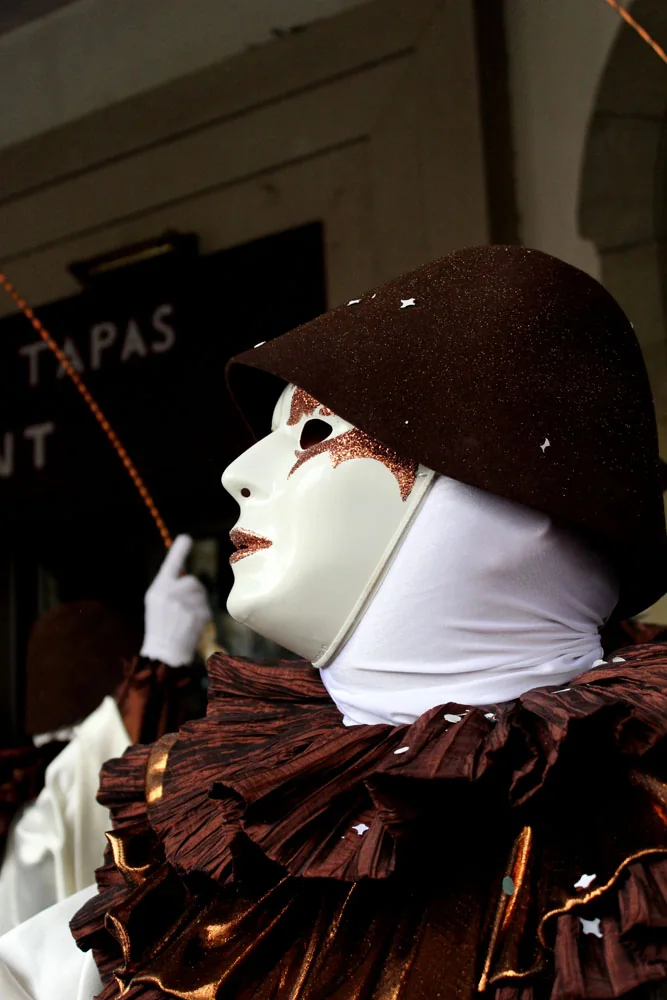
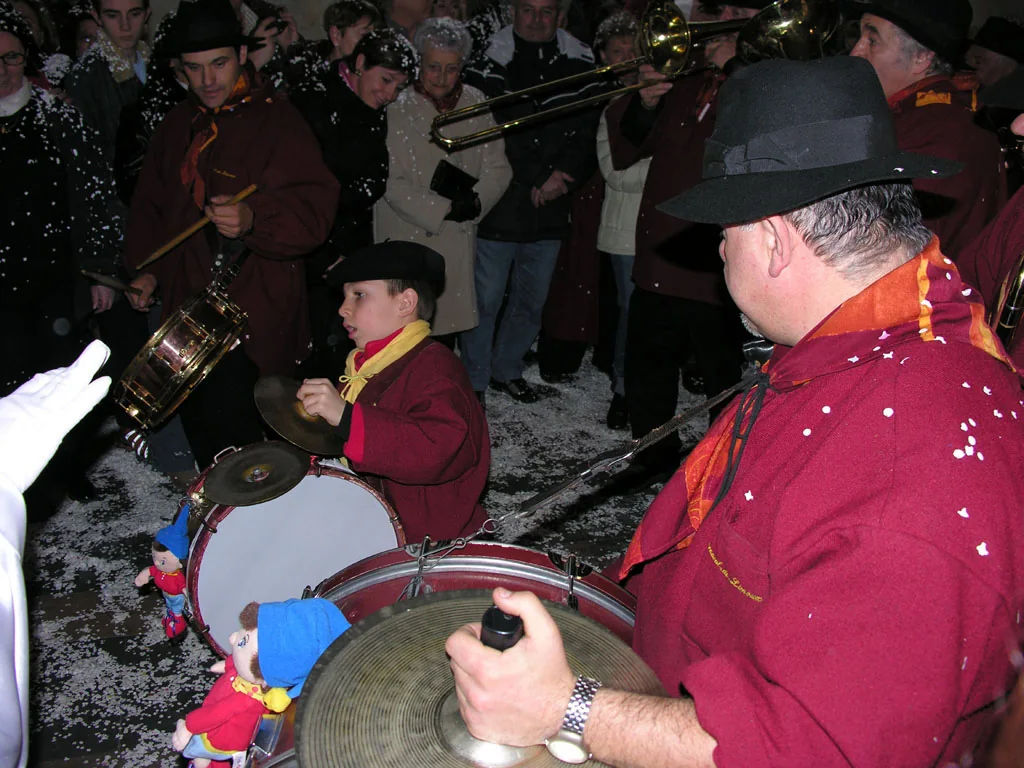
The fécos move in bands, their costumes giving each group its own identity. Music, gestures and the ribboned carabène form a language learnt through participation.
Among the disguised characters, the art of la chine brings the crowd into the occasion. A changed voice, a private joke, someone trying to recognise the person behind a mask: familiarity makes the mischief possible. The spectator can become part of the performance.
A square that changes with the light
Daylight brings costume and colour into view. By night, the entorches alter the atmosphere of the square. Photographs catch very different faces of the same gathering.
The carnival returns over a season. That repetition gives people time to take part, recognise a band, learn a tune and make the square their own. It is a reason to come back to town when the vineyards are in their winter rhythm.
A tradition people keep making
Stories of millers and flour belong to the carnival’s inherited accounts. Its precise origins remain debated. A more firmly dated part of its history is the formation of the carnival committee in 1946.
In 1968, the ethnographers Claudie Marcel-Dubois and Marie-Marguerite Pichonnet-Andral recorded and documented the celebration. Their work preserves a particular moment in its life: musicians, outings, testimony and the cafés around the square.
Such records make the tradition more human. The carnival has been organised, renewed and passed on by particular people. Each season adds another layer.
Why it belongs in the Collection
The masks give our imagery a connection to the life of Limoux. They stand for a place whose character is expressed in public, with humour, ceremony and a willingness to join in.
There is a kinship with the growers’ stories: knowledge carried forward through practice, with room for each generation to contribute. A glass can introduce you to the vineyard. Carnival introduces you to the town.
Archival scenes from Limoux Carnival; these photographs do not depict the 2026 or 2027 seasons.
Crémant · Blanquette & Crémant
An old story. More to discover.
The history brings us to Limoux. The wines give us reasons to stay.
Mauzac, the abbey of Saint-Hilaire and the patience of a cellar all belong here. Understanding how they connect makes the next bottle more interesting.
The story at Saint-Hilaire
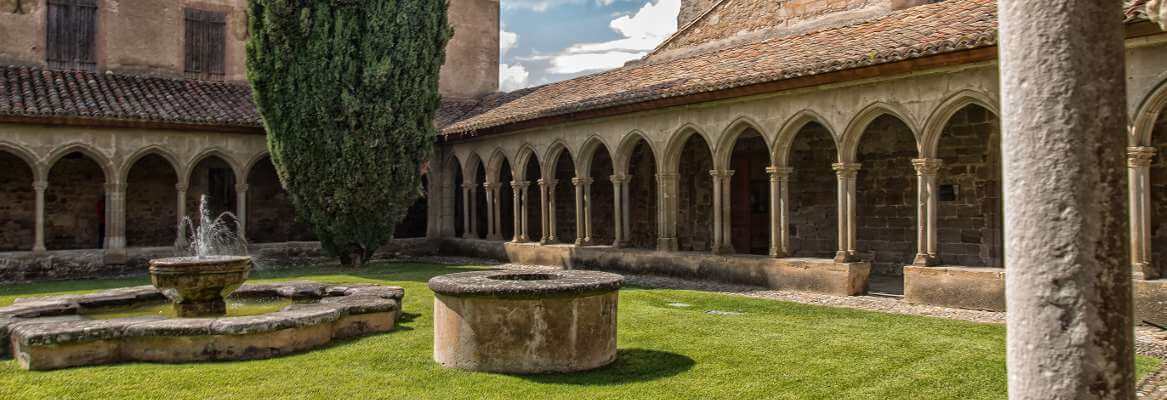
Local tradition places the monks’ discovery of sparkling wine at Saint-Hilaire in 1531. It is part of how Limoux tells its story: an abbey, a wine and the surprise of bubbles.
Tradition and documentary proof do different work. The exact circumstances of that discovery remain a historical question. We can enjoy the abbey’s place in the story while turning our attention to what growers make here today.
Blanquette: following Mauzac
Mauzac is central to Blanquette’s identity. In Blanquette de Limoux, a second fermentation in the bottle creates the effervescence. Time in the cellar and the producer’s choices then help shape the finished wine.
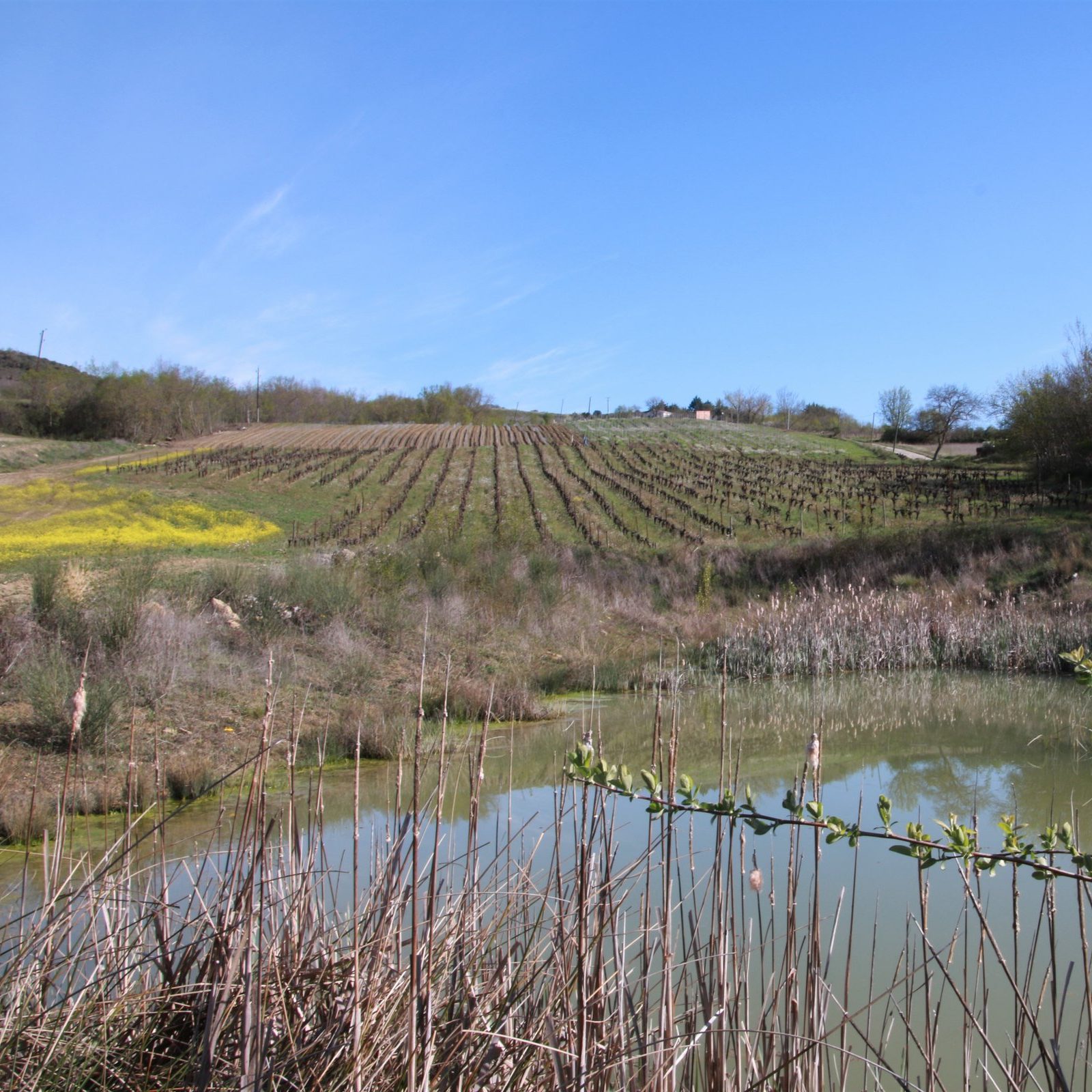
Start with the grape and follow it beyond a single style. Mouscaillo’s Mauzaïc project explores diversity within Mauzac itself, linking different selections to the revival of grafting in the vineyard. An old regional grape still offers new ground to investigate.
The ancestral route
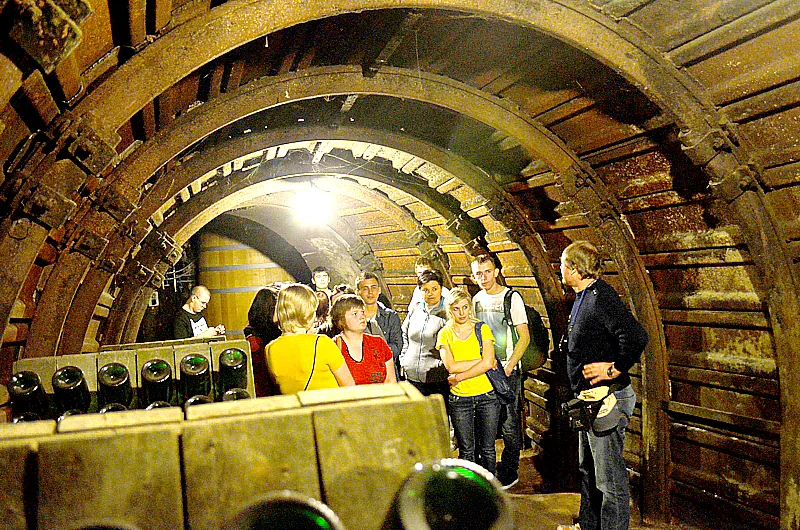
The ancestral method completes a first fermentation in the bottle. That distinction separates it from the second fermentation used for traditional-method Blanquette and Crémant.
It gives us another way to explore Mauzac and another reason to read the individual wine’s description. The method explains a process; the bottle tells us how a particular grower has carried it through.
Crémant: another chapter
Crémant de Limoux gained its own appellation in 1990. It broadened the region’s sparkling story, giving producers another framework within which to work.
Chardonnay and Chenin are central to its identity. As with Blanquette, the second fermentation takes place in the bottle. Comparing the two is an invitation to notice what changes with the grapes, the blend and the maker’s decisions.
Continue beyond the bubbles
Limoux’s still wines deserve their own place at the table. For AOP Limoux Blanc, barrel vinification and ageing are part of the appellation’s requirements. The cellar therefore belongs in the explanation alongside the hillside.
Move between a domaine’s sparkling and still wines, or follow one grape through several producers. Limoux becomes a place with many possible starting points, and a good reason to return.
A region bigger than one name.
Gérard Bertrand has done extraordinary things for the wines of the Languedoc. Over three decades, his work has helped take the wines, terroirs and ambition of southern France to an international audience. His success has helped demonstrate what the Languedoc can achieve.
But the hillsides of Limoux tell many stories. Along the same valleys, slopes and Pyrenean foothills are smaller domaines: families working more modest parcels, making wines with their own histories, personalities and interpretation of the land.
The Limoux Collection exists to bring some of those producers into the spotlight — not in opposition to the success of Gérard Bertrand, but alongside it. By working together under one collection, smaller independent producers can reach restaurants, hotels, pubs and retailers much further from home while retaining the individuality that makes them worth discovering in the first place.
Find your own starting point.
Discover the Collection’s sparkling wines and the producers behind them.
Country · Discover Limoux · The town
Limoux, still being made.
A place keeps its character through the people who choose its future.
Begin with a grower, a patch of hillside or a winter gathering in the square. Each leads into a different Limoux; the pleasure is in following the connections.
The character of Limoux
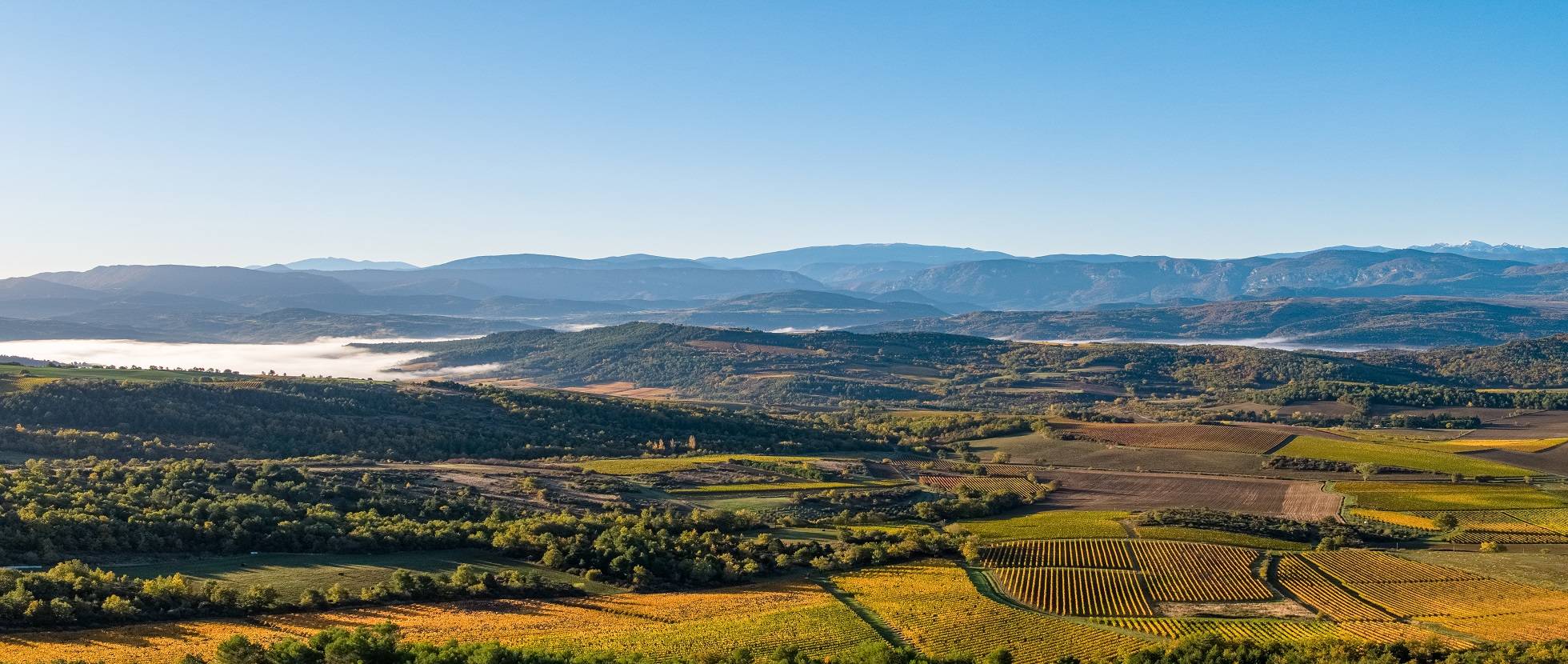
Limoux brings southern France into a different focus. The warmth is here, but so are Atlantic influences and the cooler conditions of the Pyrenean foothills. The result is a landscape that asks us to look beyond a single idea of what a southern wine should be.
Its wine culture has several centres of gravity. Mauzac anchors Blanquette; the ancestral method and Crémant offer other routes into sparkling wine. Still Limoux Blanc gives barrel work a place in the appellation itself. The Collection also follows growers into nearby vineyards and other appellations, including Girard’s Malepère. The journey is connected by people and place, while each label keeps its own meaning.
Then there is winter. Carnival puts a particular face on the town by hiding the faces of its dancers. The local knowledge, humour and ritual make the wine country feel inhabited. For us, Limoux’s distinction is the meeting of these things: a varied landscape, a grape with deep local roots, room for experiment and a culture carried by the people who live here.
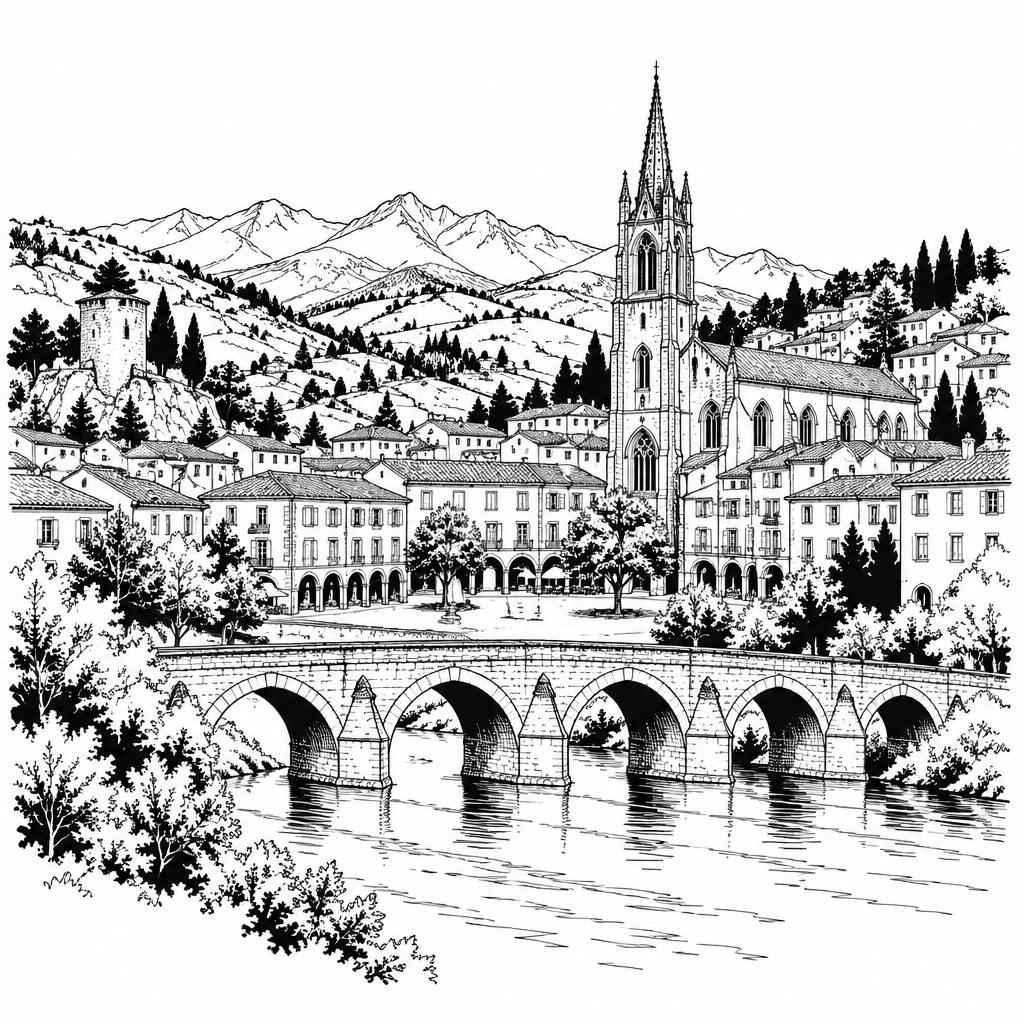
The journey home
Returning to a family vineyard is a decision about what comes next. At Mouscaillo, two generations have brought experience from elsewhere back to Roquetaillade. At Pasquetto, two brothers made space for their own first vintage in their parents’ garage.
These stories give continuity a human scale. People leave, learn and return. The land is familiar; the ideas they bring to it can be new. A family name on a bottle holds that movement as well as the years spent in one place.
A landscape of decisions
A vineyard can be inherited. How to farm it still has to be decided. At Delmas, the choice to convert to organic farming became a lasting commitment. At Clos Teisseire, a change of profession helped give the family vineyard its next chapter.
Follow those choices into the cellar and the landscape becomes easier to understand. A grower may bring contrasting parcels together, keep one apart, or explore another expression of a familiar grape. The wine is where place and judgement meet.
The square belongs in the story
The carnival draws us back into the town. A mask, a tune and a gesture carry knowledge that makes sense among people who recognise one another. The visitor first sees the spectacle; closer attention reveals the relationships that sustain it.
This is the connection we see between the town and its vineyards: a tradition continues because people give it time, learn its skills and find their own place within it. The masks in the Collection’s imagery belong to that living community.
A place accustomed to looking outwards
Limoux’s connections beyond the valley are older than the Collection. Historical research follows its medieval cloth merchants into the territories of the Crown of Aragon. Exchange belongs to the town’s past as well as its present.
Today, our part is to make introductions through wine. We want a bottle to lead you to its maker, and the maker to open up a place you will want to know better. Great wines think alike; discovering their differences is the pleasure of the journey.
“Our original Napa”
The Aude, our French California.
At Esprit Limoux, this is how we think of our corner of France: vineyards, open country, mountains and sea, with Limoux at its heart. Toulouse lies to the northwest; Carcassonne opens the door to the Aude; the Mediterranean waits to the east, and the Pyrenees rise to the south.
When the snow is good, imagine skiing in the morning, taking in the sea air on the beach later in the day, then returning to the slow, gentle pace of Limoux for dinner. Mountains, coast and vineyard country belong to the same wider journey.
Four terroirs help explain the wines. Around Limoux, sheltered Autan country meets Mediterranean influence from the east, Atlantic influence from the west, and the cooler heights of the Haute Vallée to the south. Follow the landscape and the differences in the glass begin to make sense.
- Autan
- Sheltered central country around Limoux; generally warm and dry.
- Méditerranéen
- East towards the sea; warmer, with maritime winds.
- Océanique
- West towards Toulouse; Atlantic influence, temperate and wetter.
- Haute Vallée
- South up the Aude; higher and cooler, with a later seasonal rhythm.
Sources · checked 8 Oct 2026
Limouxin Tourisme ↗Ville de Limoux ↗AOC Limoux ↗Gruissan ↗Les Angles ↗
Photographs by their authors, reproduced under the licences shown. Follow a credit to see the original file.
More editions are in preparation: producer visits, conversations around the table, seasonal discoveries and practical guides.